Chiropractic Care & X-Rays
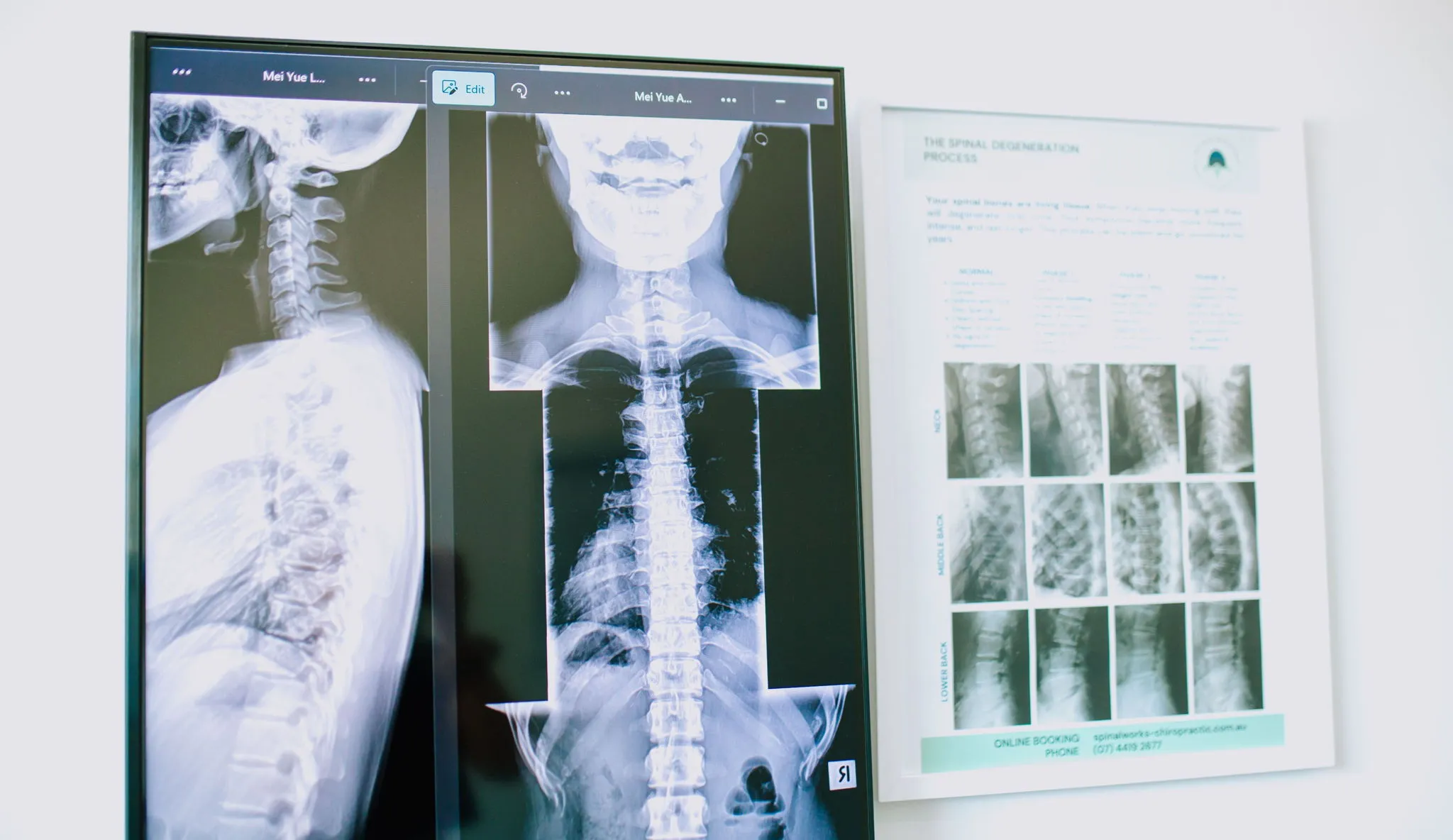
When seeing a chiropractor for diagnosis and treatment, you may be recommended to get an X-ray scan.
There are a multitude of reasons why your chiropractor may refer you for an X-ray, and it does not necessarily mean there is a serious condition present. It is important to understand your choices as a patient regarding X-rays in chiropractic care.
Are X-Rays Required When Attending Chiropractic Care?
X-ray imaging is a part of the diagnostic process for chiropractic care, but it is not always required for treatment. An X-ray scan exposes the body to small, safe doses of radiation that must be justified by medical need.
Under the Australian Chiropractic Board’s guidelines, chiropractors cannot recommend or perform X-rays without sufficient clinical justification - you should never be asked to undergo regular X-ray scans as part of treatment (e.g. weekly). In most cases, a single X-ray scan is sufficient to provide chiropractors with enough information to identify spinal issues.
How Chiropractors Use X-rays
X-rays provide a clear picture of the skeletal system; chiropractors obtain X-ray scans of the spine and hips to assess spinal health and identify problems that are not visible during the initial physical examination.
X-rays are often taken before treatment is applied. After reviewing the spine's structure and alignment on imaging, chiropractors discuss their findings with patients and typically provide a diagnosis.
In addition to aiding diagnosis, chiropractors use X-rays to minimise risk for patients. X-rays can reveal small fractures that make certain manual adjustments unsuitable, allowing chiropractors to perform safer and more appropriate treatments.
Chiropractors also use X-rays as a reference point for future comparisons, especially for long-term treatments that involve postural corrections. If you have prior X-rays of the affected area, your chiropractor will typically request that you bring them for review.
Evidence for the Use of Chiropractic X-Ray Imaging
X-ray imaging is clinically proven to be valuable for chiropractic treatment and is approved for use by the Australian Chiropractic Board.
A 2018 review published in the Journal of Chiropractic and Manual Therapies showed evidence from multiple sources that support the use of X-ray in the diagnosis and treatment of spinal trauma, spondylosis, and spinal deformity. Similar to the Australian Chiropractic Board’s guidelines, the review also confirmed that spinal X-rays should not be routinely performed in chiropractic practice due to the risks of overexposure to radiation.
When Is X-Ray Imaging Used in Chiropractic Care?
X-ray imaging used in chiropractic care covers the cervical, thoracic and lumbar regions of the spine, and may include the hips. X-rays are only taken when chiropractors deem it necessary to take a closer look at your skeletal structure. These include:
- Postural conditions, such as scoliosis or kyphosis, concerning the structure, alignment, and growth of the spine.
- Possible structural damage and trauma, including fractures, dislocations, or misalignments, commonly from an accident or a bad fall. These fractures
- Underlying bone conditions, such as arthritis or bone infections. X-rays can reveal characteristic changes in bones and joints to help chiropractors distinguish between types of arthritis (e.g. osteoarthritis, rheumatoid arthritis)
X-rays can only visualise skeletal issues (bones and joints) and are generally not used for muscle or tissue-related conditions. Your chiropractor will be the best judge of whether an X-ray is necessary to rule out any serious, underlying conditions.
Things to Consider for X-Ray Chiropractic Care
Avoid Treatment Plans With“Routine” X-Ray Scans
Experienced chiropractors do not need multiple X-ray scans on a regular basis to deliver effective treatment. Routine X-ray scans are often unnecessary, costly, and pose health risks due to frequent exposure to radiation.
If your chiropractor recommends undergoing regular X-ray scans, it is worth seeking a second opinion from another medical professional.
Consult a Radiography-Licensed Chiropractor
Chiropractors must hold a state-specific radiography licence in order to perform X-ray imaging independently. If your chiropractor does not have the required licence, they must refer you to a radiologist for X-ray imaging instead.
Chiropractors who are licensed to perform X-rays must also have approved X-ray machines and equipment. For example, the Spinal Works Chiropractic clinic in Townsville and Cairns is licensed and approved to conduct in-clinic X-ray scans, cutting down on the time required for diagnosis and treatment.



Contact Us or Book Online
Contact us for more information or book an appointment online. Your path to pain-free living starts with Spinal Works Townsville and Cairns!
